
Sirhan Sirhan
Assassin of U.S. Senator Robert F. Kennedy in 1968.

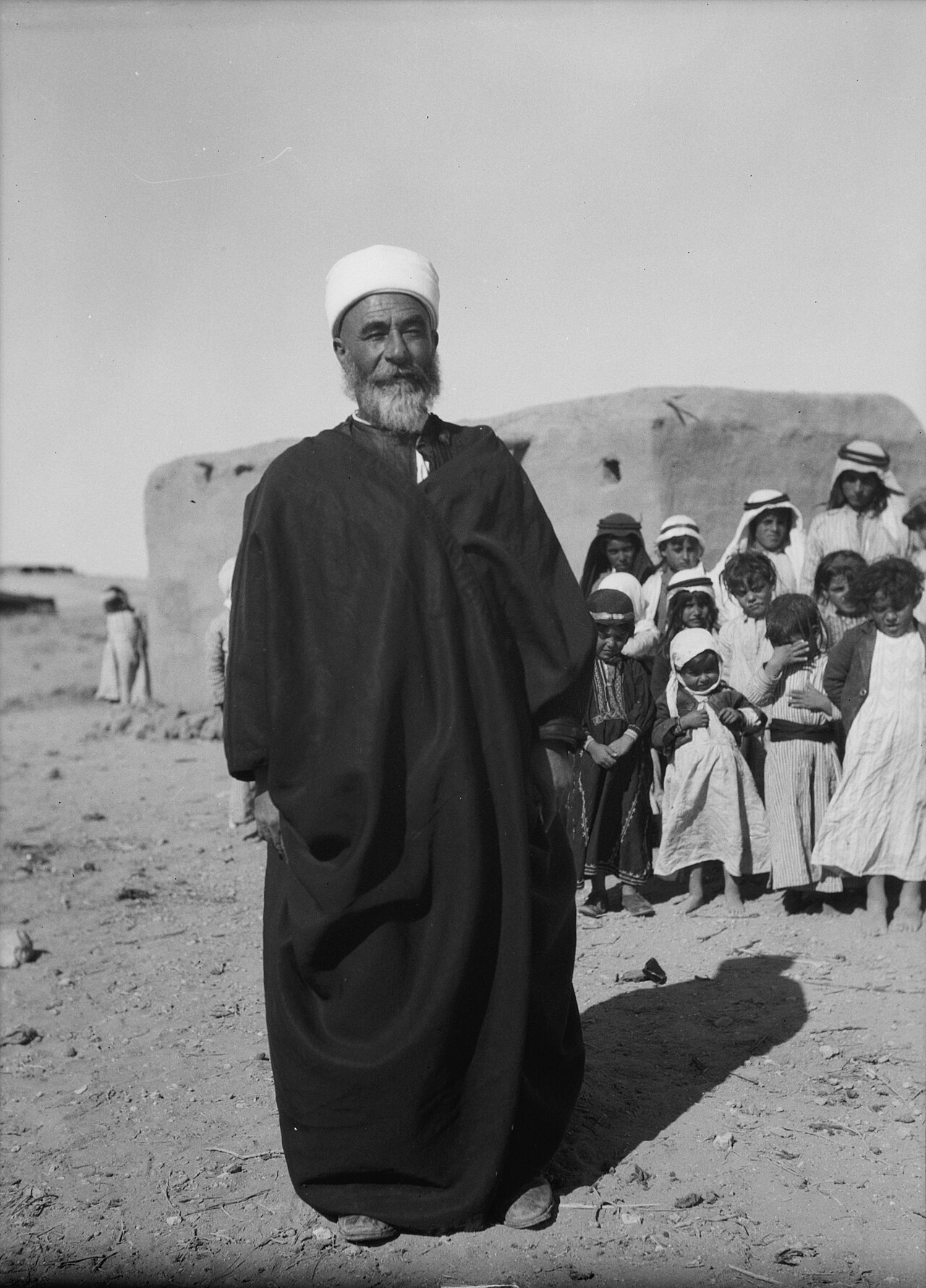
Matson Collection · Public domain
Sirhan Bishara Sirhan is a Palestinian-Jordanian man who assassinated U.S. senator Robert F. Kennedy on June 5, 1968, during the Democratic nomination campaign. The killing, which took place five years after President John F. Kennedy's assassination, has led to numerous conspiracy theories. Some scholars believe it was the first major incident of political violence in the United States stemming from the Israeli–Palestinian conflict, though the American public was overwhelmingly focused on the Vietnam War at the time.
- born
- March 19, 1944
- nationality
- Palestinian-Jordanian
- field
- Assassin
- known_for
- Assassination of Robert F. Kennedy
- conviction
- First-degree murder (April 17, 1969)
- sentence
- Death (commuted to life in 1972)
- incarceration
- Richard J. Donovan Correctional Facility, California
Verified Timeline
Lore & Background
Sirhan Bishara Sirhan was born March 19, 1944 in Mandatory Palestine, in Jerusalem's Musrara neighborhood, into an Arab Palestinian Christian family. He became a Jordanian citizen in December 1949, just before Jordan annexed the West Bank. According to his mother, Mary, Sirhan was traumatized by the violence he witnessed in the Arab–Israeli conflict as a child, including the death of his older brother, who was run over by a military vehicle which was swerving to evade gunfire. When Sirhan was 12, his family immigrated to the U.S., moving briefly to New York and then to California. He attended Eliot Junior High School, John Muir High School, John Marshall Junior High School, and Pasadena City College. Shortly after the move, his father, Bishara Salame Sirhan, returned alone to the Middle East. Standing 5 feet 5 inches and weighing 120 pounds at age 20, Sirhan moved to Corona to train as a horse jockey but lost his job and abandoned the pursuit after a head injury in a racing accident. He never became a U.S. citizen, retaining his Jordanian citizenship. In 1966, he joined the esoteric Ancient Mystical Order of the Rose Cross, one of the Rosicrucian Orders. Around 12:15 a.m. PDT on June 5, 1968, Sirhan fired a .22 LR Iver-Johnson Cadet revolver at Robert F. Kennedy and the crowd surrounding him in the Ambassador Hotel in Los Angeles, shortly after Kennedy had finished addressing supporters. Kennedy was shot three times—once in the head and twice in the back—and died about 26 hours later. Five other people were also shot, all of whom recovered. Authors George Plimpton, Jimmy Breslin, and Pete Hamill, former professional football player Rosey Grier, and 1960 Olympic gold medalist Rafer Johnson were among those who subdued and disarmed Sirhan. Even though Sirhan admitted his guilt in a recorded confession while in police custody on June 9, the judge did not accept his confession and denied his request to withdraw his plea of 'not guilty' to plead 'guilty'. On April 17, 1969, he was convicted of first-degree murder, among other charges, and sentenced to death by gas chamber. In 1972, his sentence was commuted to life imprisonment in the aftermath of People v. Anderson, which ruled that capital punishment violates the California Constitution's prohibition against cruel or unusual punishment. In 1989, Sirhan told British journalist David Frost: 'My only connection with Robert Kennedy was his sole support of Israel and his deliberate attempt to send those 50 fighter jets to Israel to obviously do harm to the Palestinians.' Sirhan is incarcerated at Richard J. Donovan Correctional Facility near San Diego. On August 27, 2021, after 15 years of being denied parole, he was granted parole by a two-person panel. Prosecutors declined to participate in or oppose his release in accordance with the directive of Los Angeles County District Attorney George Gascón. On January 13, 2022, California governor Gavin Newsom blocked Sirhan's release on parole. He was denied parole again on March 1, 2023.
Reader's Guide
Sirhan Sirhan's assassination of Robert F. Kennedy remains a pivotal and controversial event. The killing occurred on the first anniversary of the 1967 Arab–Israeli War, and Sirhan later stated his motive was Kennedy's support for Israel, specifically the planned sale of 50 fighter jets. Some scholars consider this the first major incident of political violence in the United States stemming from the Israeli–Palestinian conflict, though the American public at the time was focused on the Vietnam War. The case has generated enduring conspiracy theories, including claims of a second gunman, which Robert F. Kennedy Jr. has publicly endorsed after meeting Sirhan in prison. Sirhan's legal journey—from a death sentence commuted to life, to repeated parole hearings—reflects ongoing debates about justice and political violence. His continued incarceration and the controversies surrounding his case ensure his place as a figure of historical and legal significance.
Did You Know?
- Sirhan was 24 years old at the time of the assassination on June 5, 1968.
- He was born in Jerusalem's Musrara neighborhood into an Arab Palestinian Christian family.
- Sirhan never became a U.S. citizen, retaining his Jordanian citizenship.
- In 1966, he joined the Ancient Mystical Order of the Rose Cross, a Rosicrucian order.
- On August 27, 2021, he was granted parole by a two-person panel, but California governor Gavin Newsom blocked his release on January 13, 2022.
The Younger Name and a Notorious FBI Chapter
Born in Stamford, Nebraska, on June 19, 1918, Evelle J. Younger carried a surname already steeped in American outlaw lore—he was a second cousin twice removed from the Younger Brothers, the 19th-century gangsters often associated with the Jesse James circle. After earning his law degree from the University of Nebraska, he joined the FBI at just twenty-four and rose to become one of J. Edgar Hoover's most trusted operatives. That position led to a notorious assignment in the early 1940s: monitoring labor leader Harry Bridges at New York's Edison Hotel. Bridges grew suspicious when staff steered him to an unfamiliar room, traced wires from his phone into a neighboring suite, and then slipped out to spy on the listening agents from an adjoining rooftop. After days of counter-surveillance, Bridges called the police; the agent on duty leapt from a window onto a fire escape, leaving behind equipment and a carbon copy bearing Younger's name and title. The episode became a national embarrassment for the Bureau. Attorney General Francis Biddle personally delivered the news to President Roosevelt, who reportedly slapped Hoover on the back and quipped it was the first time he'd been caught with his pants down. Younger later served in the Office of Strategic Services, the CIA's forerunner, in the Burma-China-India theater.
From the Bench to the Television Screen
Younger's post-war service spanned both the Army and the Air Force Reserve, where he ultimately reached the rank of Major General. He was the first person promoted to Brigadier General in the Reserve while serving as a Special Agent in the Air Force Office of Special Investigations. After his military commitments, he turned to the California judiciary, serving as a municipal judge from 1953 to 1958 and then as a superior court judge until 1964. His time on the bench made him a recognizable public figure beyond the courtroom. He hosted KTLA's weekly crime-drama program Armchair Detective, and later served as both a consultant and the presiding judge on KABC-TV's reality series Traffic Court. He also authored a book titled Judge and Prosecutor in Traffic Court, blending his legal expertise with the popular media world. This combination of judicial authority and television presence made him one of the most visible legal figures in Los Angeles during the late 1950s and early 1960s, a profile that would serve him well when he moved into the prosecutor's office.
Prosecuting History and Shaping California Law
In 1964, Younger became district attorney of Los Angeles County, a role that placed him at the center of some of the era's most consequential criminal cases. He oversaw the prosecutions of both Charles Manson and Sirhan Sirhan, two defendants whose trials dominated national headlines. He also became the first prosecutor in the United States to bring mass felony charges against college campus demonstrators during the turbulent 1960s. In 1971, he was elected the 26th Attorney General of California, the first Republican to hold that office in a generation. During his tenure from 1971 to 1979, he helped develop the California Environmental Quality Act and championed a broad reading of its scope, filing a brief in the landmark 1972 case Friends of Mammoth v. Board of Supervisors. That ruling established the requirement for environmental impact evaluations before public agencies approve new construction, cementing the law's significance. In the 1978 Republican primary, Younger defeated Edward M. Davis, Kenneth L. Maddy, and a then-lesser-known Pete Wilson to secure the gubernatorial nomination, only to lose the general election to incumbent Jerry Brown by a landslide. He retired from politics the following year.
Family, Final Chapter, and the Hollywood Hills
Younger's personal life was anchored by his marriage to Mildred Eberhard on July 3, 1942. Their son Eric, born in San Francisco in 1943, followed a legal path of his own, eventually becoming a Los Angeles County Superior Court judge. After leaving public office in 1979, Younger joined the law firm Buchalter, Nemer, Fields, & Younger as a senior partner, a position he held until his death. He passed away from heart disease at his home in the Hollywood Hills on May 4, 1989, at the age of seventy. He is interred at the Los Angeles National Cemetery, where Mildred Eberhard Younger, who survived him until her own death in 2006, also rests. His life traced an extraordinary arc: from a small Nebraska town to the halls of the FBI, through wartime service in two theaters, across California courtrooms and television studios, and finally into the offices of the state's highest elected legal post, all under a name that would have been instantly recognizable to any student of American frontier history.
Gallery
Frequently Asked Questions
Who is Sirhan Sirhan?
Sirhan Bishara Sirhan is a Palestinian-Jordanian man born on March 19, 1944, who became infamous for the 1968 assassination of U.S. Senator Robert F. Kennedy.
What is Sirhan Sirhan known for?
He is recognized as the assassin who shot and killed Senator Robert F. Kennedy at the Ambassador Hotel in Los Angeles on June 5, 1968, during the Democratic presidential primaries.
What was Sirhan Sirhan's conviction and sentence?
On April 17, 1969, he was found guilty of first-degree murder and sentenced to death, though that penalty was later commuted to life imprisonment in 1972.
Why is Sirhan Sirhan historically significant?
His crime marked one of the earliest instances of political violence in the United States connected to the Israeli–Palestinian conflict, and it occurred just five years after the Kennedy assassination, fueling decades of conspiracy speculation.
What nationality was Sirhan Sirhan?
He was of Palestinian-Jordanian nationality, having been born in Jerusalem to a Palestinian family before emigrating to the United States.
More in Criminals And Outlaws 1-24
Elsewhere in the Criminals And Outlaws universe
Spotted an error? Know more?
This is a living reference — every entry is fact-audited, and reader corrections feed straight into our audit queue. Suggest an edit · See this site's audit record