
Victor Lustig
Con artist from Austria-Hungary who sold the Eiffel Tower twice and ran the Rumanian Box scam.

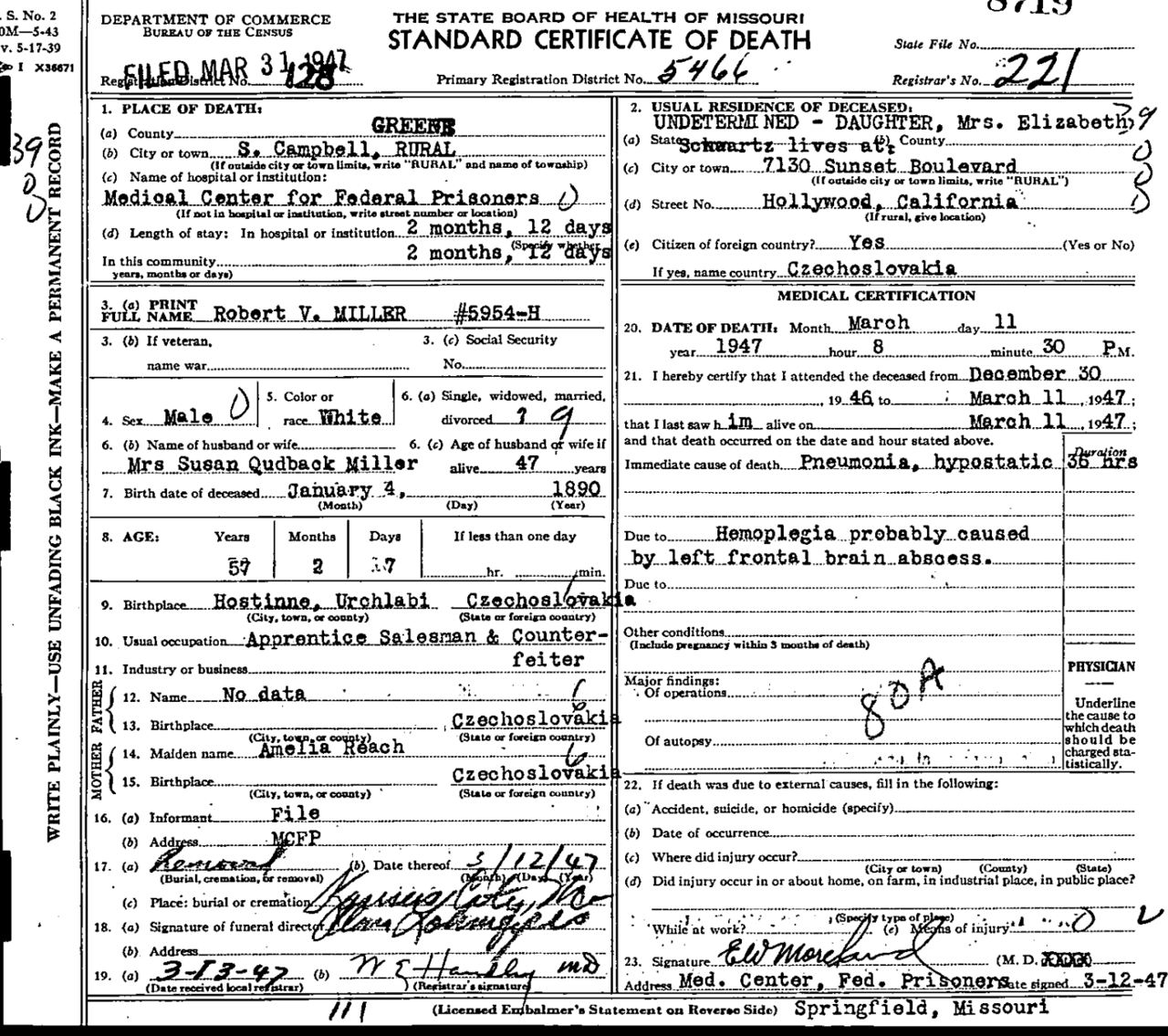
The State Board of Health of Missouri · Public domain
Victor Lustig (4 January 1890 – 11 March 1947) was a con artist from Austria-Hungary, who undertook a criminal career that involved conducting scams across Europe and the United States during the early 20th century. Lustig is widely regarded as one of the most notorious con artists of his time, and is infamous for being "the man who sold the Eiffel Tower twice" and for conducting the "Rumanian Box" scam.
- nationality
- Austrian-Hungarian
Verified Timeline
Lore & Background
Lustig was born in Hostinné, part of the Kingdom of Bohemia, Austria-Hungary, as the second of three children to Ludwig and Amelia "Fanny" Lustig. Raised in a German-speaking middle-class Catholic family, he grew up in a four-room house at Tyrsovy street. His father was a tobacco goods salesman and at one point a mayor of Hostinné, who was reportedly physically abusive towards his children and wife. At age eight, Lustig was forced to sign a written oath to abstain from alcohol and always attend church. He also had to attend violin lessons, which he hated, and during an argument his father beat Lustig over the head with the instrument. His parents divorced around 1898, although they still lived together during the 1900 census. On his first day of infant school, Lustig was immediately expelled for obscenity, after telling a female teacher "Leck mich am Arsch" ("Kiss my ass"). A 1902 school report described him as "retarded morally, an idiot in other respects". By age thirteen, Lustig had taken up boxing. In 1904, he ran away from home for a week before returning. He was sent to a boarding school in Dresden, where he learnt English, French, Italian, and Hungarian and took a course in design. Most biographers state that he dropped out before his 17th birthday. In 1909, shortly after starting a semester at the Sorbonne in Paris, Lustig took to gambling. During this time he sustained a defining scar on the left side of his face from the jealous boyfriend of a woman he consorted with.
Reader's Guide
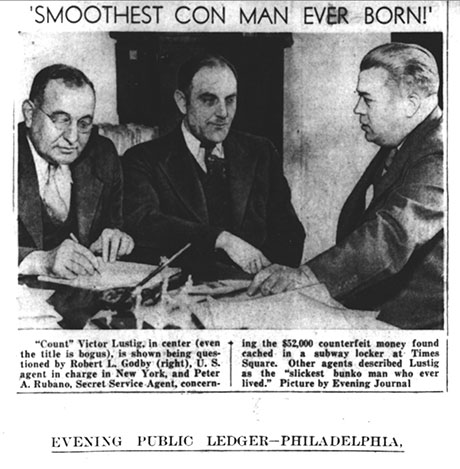
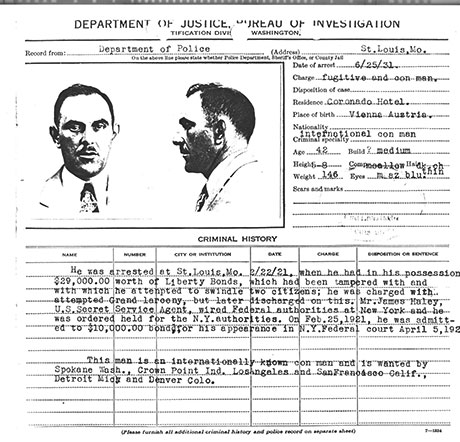
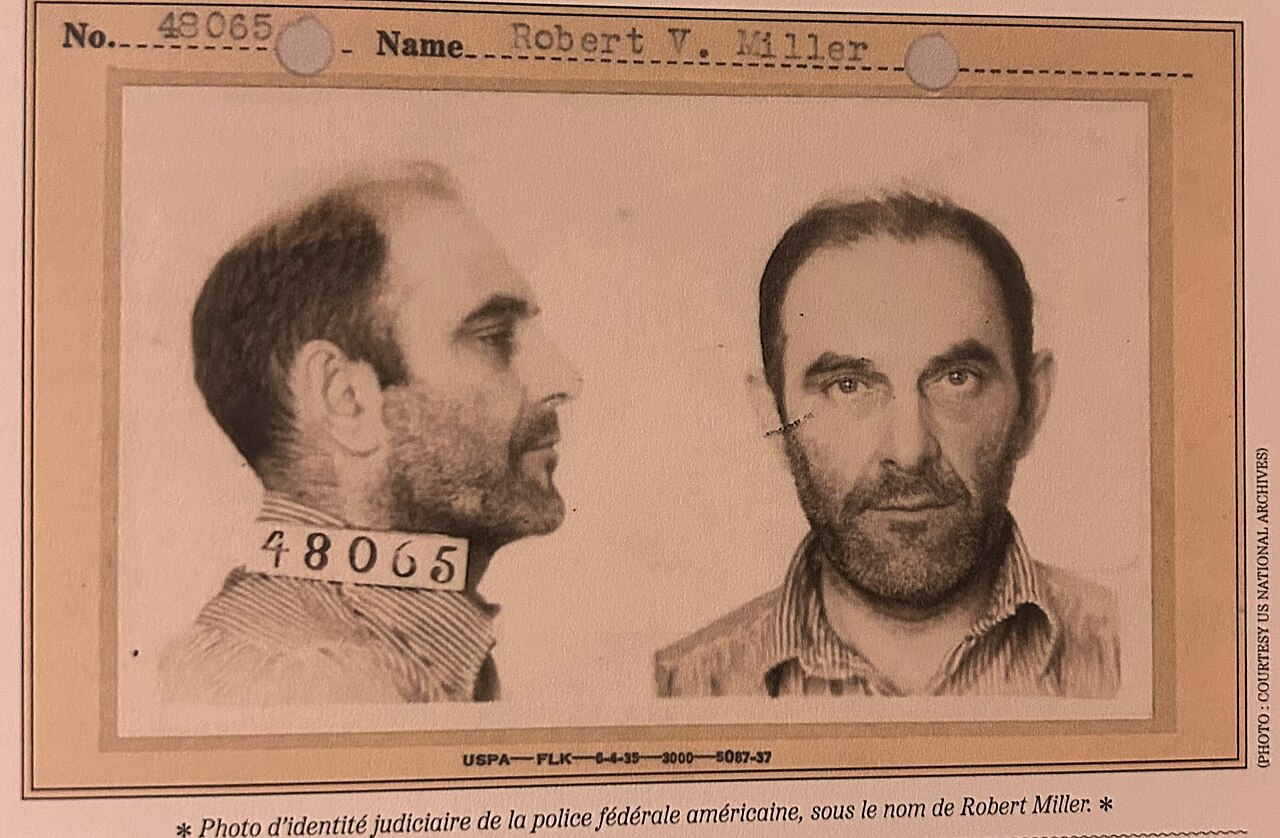
Lustig's career began with cons on ocean liners sailing between France and New York, where he posed as a musical producer seeking investors in a non-existent Broadway production. In May 1922, posing as Robert Duval, he purchased land from a bank in Springfield, Missouri, overpaid with Liberty bonds, pocketed his bonds along with $10,000 in change, and was arrested in New York City. In 1925, back in Paris, he chanced upon a newspaper article about the Eiffel Tower's disrepair. He hired a forger to produce fake government stationery, then invited scrap metal dealers to a confidential meeting, identifying himself as the Deputy Director-General of the Ministère de Postes et Télégraphes. He convinced them the government wished to sell the tower for scrap. His mark was André Poisson, an insecure man who wished to rise in Parisian business. Lustig convinced Poisson he was a corrupt official, and Poisson paid a large bribe plus around 70,000 francs for the tower's "sale". Lustig fled to Austria, then returned to Paris to pull off the scheme once more, but fled to the U.S. when police were informed. The "Rumanian Box" scam involved a mahogany box that supposedly duplicated currency. Lustig would demonstrate by inserting a bill, then produce a genuine bill he had planted. He once sold a money box to a Texas sheriff for thousands of dollars; when the sheriff pursued him to Chicago, Lustig gave him counterfeit cash as compensation, which led to his arrest. On 5 July 1929, Lustig and William McSherry were arrested in Chicago, traveling as "Robert Miller" with forged documents and a money box. During the Great Depression, Lustig concocted a risky scam aimed at Al Capone.
Did You Know?
- Lustig was expelled from infant school on his first day for telling a female teacher 'Leck mich am Arsch' ('Kiss my ass').
- A 1902 school report described Lustig as 'retarded morally, an idiot in other respects'.
- Lustig sustained a defining scar on the left side of his face from the jealous boyfriend of a woman he consorted with.
- Lustig once sold a money box to a Texas sheriff for thousands of dollars, then gave him counterfeit cash as compensation.
- On 5 July 1929, Lustig was arrested in Chicago while traveling as 'Robert Miller', carrying forged documents and a money box.
Gallery
Frequently Asked Questions
Who is Victor Lustig?
Victor Lustig was an Austrian-Hungarian con artist born in 1890 who pulled off a string of elaborate swindles across Europe and the United States in the early 1900s. He is frequently named among the most audacious and theatrical fraudsters of his generation.
Did Victor Lustig really sell the Eiffel Tower?
Lustig is credited with at least one verified con in which he impersonated a government official and sold scrap-iron rights to the Eiffel Tower to a metal dealer. The episode has since ballooned into legend with multiple retellings, but historians confirm only a single transaction.
What was the 'Rumanian Box' scam?
The 'Rumanian Box' was a signature trick in which Lustig presented a sealed box to a mark and demanded a large fee to open it, only to reveal a worthless or misleading object inside. The scheme showcased his gift for psychological pressure and misdirection.
How did Victor Lustig die?
Lustig died on 11 March 1947 in a Paris hospital, reportedly from a stroke. He was living far from the spotlight of his earlier, more notorious years at the time of his death.
Why is Victor Lustig a notable figure in criminal history?
His willingness to stage grand, almost theatrical cons against wealthy and influential targets set a template that later swindlers and con artists have referenced. The Eiffel Tower story in particular has elevated him to near-mythical status in outlaw and fraud lore.
More in Criminals And Outlaws 1-24
Elsewhere in the Criminals And Outlaws universe
Spotted an error? Know more?
This is a living reference — every entry is fact-audited, and reader corrections feed straight into our audit queue. Suggest an edit · See this site's audit record