
Tommaso Buscetta
High-ranking Sicilian Mafia member who became a key informant.
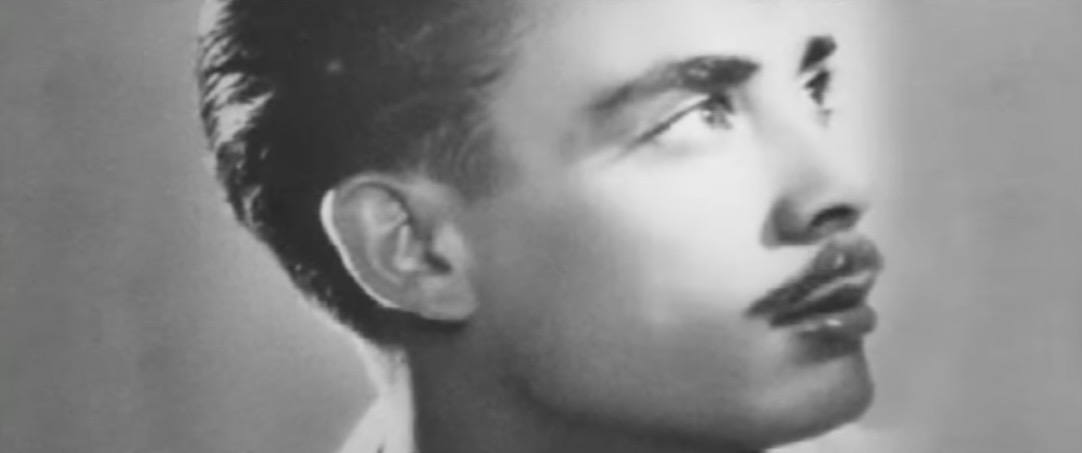
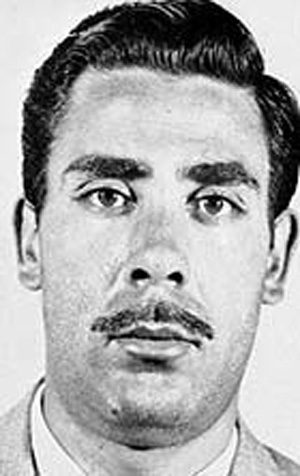
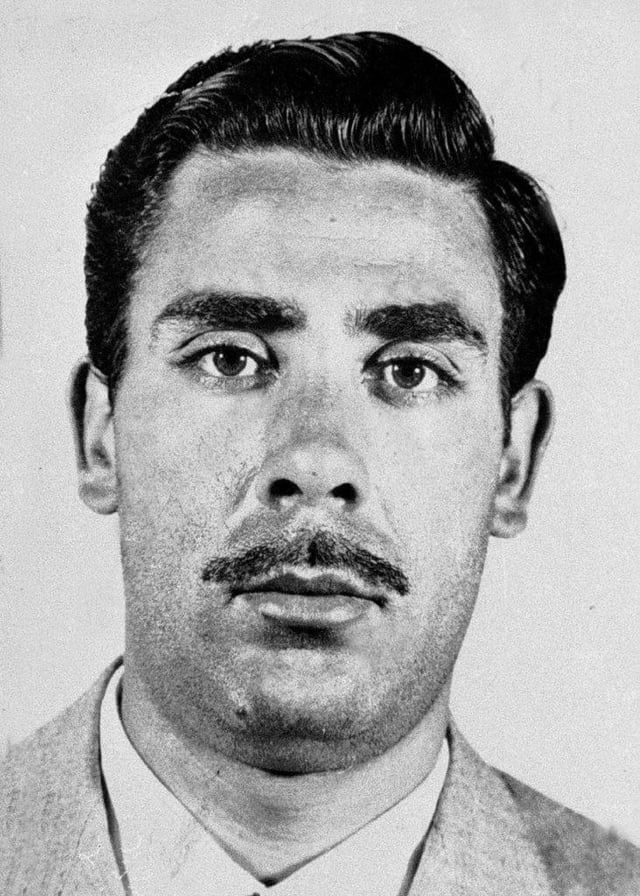
Tommaso Buscetta, born in Palermo in 1928, was the youngest of seventeen children in a poor family; his father worked as a glazier. Growing up in the impoverished Kalsa district, he turned to crime early, joining the Sicilian Mafia in 1945. He became a full member of the Porta Nuova mandamento, initially focusing on cigarette smuggling. After his first marriage in 1944, he moved to Argentina and Brazil, opening a glassworks store, but returned to Palermo in 1956 to work with other mafiosi on cigarette and drug trafficking. He was arrested in 1958 for smuggling and criminal association, and again in 1959 for smuggling two tons of cigarettes to Yugoslavia. Following the Ciaculli massacre in 1963 during the First Mafia War, he fled to Switzerland, Mexico, Canada, and the United States. In 1968, an Italian court convicted him in absentia for two murders related to that massacre. Arrested in Brooklyn in 1970, he was released months later. He then moved to Brazil, underwent plastic and vocal cord surgery, and built a drug network with French trafficker Lucien Sarti. Arrested by Brazil’s military government in 1972, he was extradited to Italy and sentenced to ten years for drug trafficking, later reduced to eight. Granted half-freedom in 1980, he fled back to Brazil to escape the Second Mafia War. After his two sons disappeared in 1982, followed by the murders of his brother, son-in-law, brother-in-law, and four nephews, he became disillusioned. Arrested again in São Paulo in 1983 and extradited to Italy in 1984, he attempted suicide, then decided to cooperate. He spoke with judge Giovanni Falcone for 45 days, revealing the Mafia’s hierarchy, commission, and initiation rituals—a framework later called the “Buscetta theorem.” He refused to detail political ties, believing the state unprepared. Extradited to the United States, he entered the Witness Protection Program, gained American citizenship, and testified in the Pizza Connection Trial and the 1986 Maxi Trial, which indicted 475 Mafia members and convicted 338. After the murders of judges Falcone and Paolo Borsellino, he testified before the Antimafia Commission, linking politicians to the Mafia. He remained in the program until his death in 2000.
- field
- Organized crime, informant
- nationality
- Italian
- known_for
- Becoming a pentito and testifying in the Maxi Trial
Lore & Background
Tommaso Buscetta was born in Palermo, Sicily, the youngest of 17 children, and raised in the poverty-stricken Kalsa area. After the Ciaculli massacre in 1963, he fled to several countries, including the United States, and was later convicted in absentia for two murders. He spoke with anti-Mafia judge Giovanni Falcone for 45 days, revealing the hierarchical structures of Cosa Nostra, including the Sicilian Mafia Commission, in what became known as the 'Buscetta theorem'. He was buried under a false name in North Miami, Florida.
Reader's Guide
Tommaso Buscetta's significance lies in his role as one of the first high-ranking Sicilian Mafia members to break the code of omertà and become a pentito. His detailed testimony to judge Giovanni Falcone provided an unprecedented insider's view of Cosa Nostra's structure, including the Sicilian Mafia Commission, which had previously been opaque to authorities. This information was instrumental in the Maxi Trial, the largest anti-Mafia trial in history, resulting in hundreds of convictions. Buscetta's later testimony linking Italian politicians to the Mafia, particularly after the murders of Falcone and Borsellino, further expanded the understanding of organized crime's political connections. His cooperation marked a turning point in Italian anti-Mafia efforts, though he lived the rest of his life in hiding under witness protection. His legacy is complex: a former mobster whose revelations reshaped the fight against the Mafia, but who also faced personal tragedy, including the murders of his sons by fellow Mafia members.
Did You Know?
- Buscetta was known as 'The Boss of Two Worlds' due to his criminal activities in Italy, the United States, and Brazil.
- He attempted suicide by ingestion of barbiturates after being extradited to Italy in 1984, before deciding to cooperate.
- He forgave the Mafia member who murdered two of his sons, but only after learning of it later and after the killer was already dead.
Gallery
Frequently Asked Questions
What was Tommaso Buscetta's role in the Mafia?
Buscetta occupied a high-ranking position within the Sicilian Mafia's command structure and served as a key liaison between Italian and American organized-crime circles. That cross-border influence is what earned him the 'Boss of Two Worlds' label.
Why is Tommaso Buscetta important to the study of organized crime?
He was among the first Mafia members to systematically cooperate with Italian prosecutors, fundamentally shifting how the state investigated and prosecuted the organization. Beyond the Maxi Trial, he later provided evidence linking Italian politicians to Mafia operations, expanding the reach of accountability.
More in Criminals And Outlaws 1-24
Spotted an error? Know more?
This is a living reference — every entry is fact-audited, and reader corrections feed straight into our audit queue. Suggest an edit · See this site's audit record